

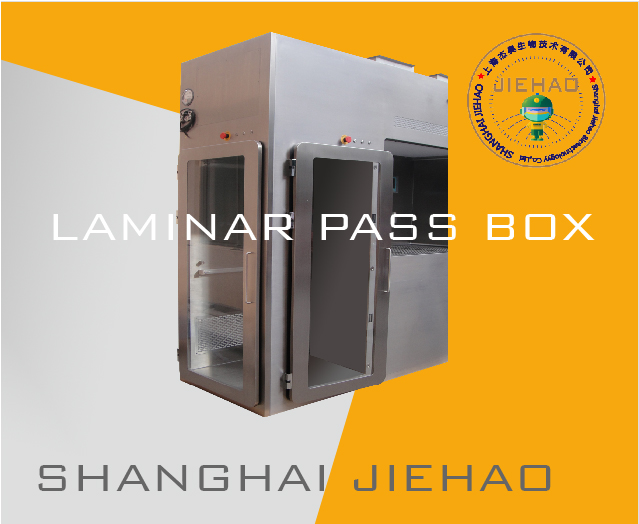
层流罩传递窗一体设备如何设计?
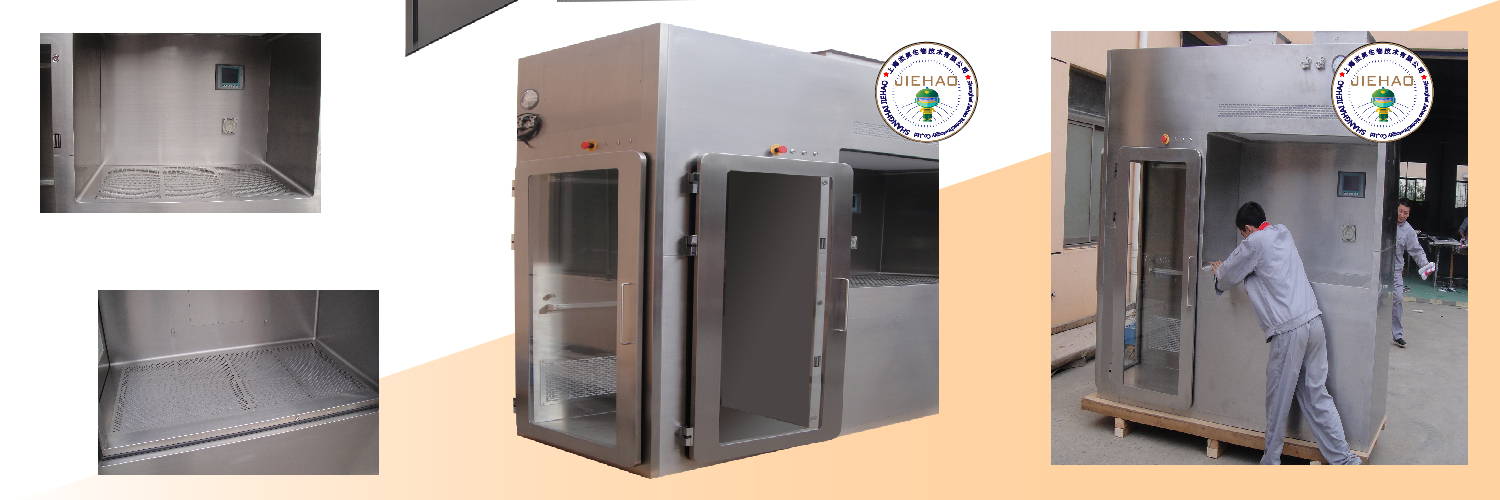
杰昊层流罩传递窗一体设备是一种集成了层流罩和传递窗功能的设备,通常用于需要高洁净度环境的实验室或工业生产线。
以下是一些关键特点和功能:
1. 层流罩(Laminar Flow Hood):提供局部的洁净空气环境,通过高效过滤系统(HEPA或ULPA过滤器)将空气过滤后以层流方式向下流动,减少空气中的微粒和微生物,确保操作区域的高洁净度。
2. 传递窗(Pass Box):作为连接不同洁净等级区域的通道,允许物品从一个区域安全地传递到另一个区域,而不需要打开整个洁净室或手套箱,从而减少环境之间的交叉污染。
3. 一体化设计:将层流罩和传递窗集成在一个设备中,节省空间,同时提供更高效的操作流程和更好的洁净度控制。
4. 密封性能:确保传递窗在关闭状态下能够完全密封,防止污染物的侵入。
5. 材料选择:根据应用需求选择合适的材料,一般采用304不锈钢,部份采用316L,以满足耐腐蚀、耐高温等特性。
6. 操作便利性:设计时考虑到操作人员的使用习惯,确保易于操作,如自动门、触摸屏控制等。
7. 附加功能:可选包括压力控制、气体净化、温度和湿度调节等,以适应特定的工艺要求。
8. 维护和清洁:设备应易于清洁和维护,以保持其性能和延长使用寿命。
这种一体化设备广泛应用于半导体制造、生物制药、医疗设备制造等领域,为敏感材料的加工和处理提供了一个安全、洁净的环境。
杰昊层流罩传递窗一体设备的设计存在一些技术挑战和难点,主要包括以下几个方面:
1. 洁净度的保证:层流罩传递窗需要维持B级洁净度,这要求内部的空气必须通过高效过滤器进行过滤,以去除空气中的尘埃、烟雾、细菌等有害物质 。
2. 密封性能:设计时需要考虑到内外双层壳体的密封性,内部四周圆弧处理以保证无缝隙连接,这对于防止污染物的侵入至关重要 。
3. 气流控制:采用层流设计,气流流向需采用上送下回模式,底部采用304不锈钢冷轧板冲孔设计,并设置加强筋以控制风速在0.38-0.57m/s 。
4. 过滤器的选择与维护:初效过滤器采用G4,高效过滤器采用H14,需要确保过滤器的高效性和便于维护更换 。
5. 电子控制与互锁系统:配置内置式电子门互锁,以及紫外灯和照明灯的单独控制开关,确保操作的安全性和便捷性 。
6. 维护与检修:高效过滤器需要能够单独从上部箱体进行拆卸和安装,便于维护和更换滤器,同时在传递窗下部设置检修口,用于风机的检修 。
7. 噪声控制:传递窗正常运行时噪声需控制在<65db,以保证工作环境的舒适性 。
8. 材料选择:内外表面及框架通常采用304不锈钢冷轧板,板材厚度和表面处理需要满足特定的光洁度要求 。
9. 传感器校验与验证:所有传感器必须经过具有法定资质的校验单位校验,并提供校验记录和合格证书 。
10. 现场测试与验证文件:设备安装完毕后,供应商需要对每台洁净传递窗进行现场测试,并提供符合GMP标准的验证文件资料 。
11. 美观与实用性:设备表面应光滑,无毛刺,不积尘,易清洁,所有缝隙采用食品级中性密封胶密封,同时电线隐藏不得外露,确保设备的美观与实用性 。
这些设计难点需要通过技术创新和精细的工程设计来克服,以确保层流罩传递窗一体设备能够高效、稳定地运行,并满足特定的工艺要求和安全标准。
How to design a integrated equipment of laminar flow hood and pass box?
The Laminar Flow Hood Pass Box Integrated System is a specialized apparatus that combines the capabilities of both a laminar flow hood and a pass box. It is extensively utilized in settings that demand stringent cleanliness standards, such as research laboratories and manufacturing facilities.
Here are its core attributes and functionalities:
1. Laminar Flow Hood: Provides a local
clean air environment, where air is filtered through a high-efficiency
filtration system (HEPA or ULPA filters) and flows downward in a laminar flow
pattern, reducing particles and microorganisms in the air and ensuring high
cleanliness in the operational area.
2. Pass box: Serves as a passage connecting
different cleanliness grade areas, allowing items to be safely transferred from
one area to another without opening the entire cleanroom or glove box, thereby
reducing cross-contamination between environments.
3. Integrated Design: Combines the laminar flow hood and pass box into one piece of equipment, saving space and providing a more efficient operation process and better cleanliness control.
4. Sealing Performance: Ensures that the pass box is completely sealed when closed to prevent the intrusion of contaminants.
5. Material Selection: Chooses suitable materials according to application requirements, generally using 304 stainless steel, and some parts using 316L, to meet characteristics such as corrosion resistance and high-temperature resistance.
6. Operation Convenience: The design takes into account the habits of operators to ensure easy operation, such as automatic doors, touch screen controls, etc.
7. Additional Features: Options may include pressure control, gas purification, temperature and humidity regulation, etc., to adapt to specific process requirements.
8. Maintenance and Cleaning: The equipment should be easy to clean and maintain to keep its performance and extend its service life.
This integrated equipment is widely used in fields such as semiconductor manufacturing, biopharmaceuticals, and medical equipment manufacturing, providing a safe and clean environment for the processing and handling of sensitive materials.
The design of the Laminar Flow Hood Pass box Integrated Equipment has some technical challenges and difficulties, mainly including the following aspects:
1. Cleanliness Assurance: The laminar flow hood pass box needs to maintain B-level cleanliness, which requires the internal air to be filtered through high-efficiency filters to remove harmful substances such as dust, smoke, and bacteria from the air.
2. Sealing Performance: The design needs to consider the sealing of the inner and outer double-shell bodies, with rounded corners inside to ensure seamless connections, which is crucial for preventing the intrusion of contaminants.
3. Airflow Control: Using a laminar flow design, the airflow direction should adopt a top-to-bottom return mode, with the bottom made of 304 stainless steel cold-rolled plate with punched holes, and reinforcement ribs are set to control the wind speed at 0.38-0.57m/s.
4. Filter Selection and Maintenance: The preliminary filter uses G4, and the high-efficiency filter uses H14, which needs to ensure the efficiency of the filter and facilitate maintenance and replacement.
5. Electronic Control and Interlocking System: Equipped with a built-in electronic door interlock, as well as separate control switches for UV lights and illumination, ensuring the safety and convenience of operations.
6. Maintenance and Repair: The high-efficiency filter needs to be detachable and installable from the upper part of the box for easy maintenance and filter replacement, and a maintenance port is set at the bottom of the pass box for fan maintenance.
7. Noise Control: The noise of the pass box during normal operation needs to be controlled at less than 65db to ensure the comfort of the working environment.
8. Material Selection: The inner and outer surfaces and frames are usually made of 304 stainless steel cold-rolled plate, and the thickness of the plate and surface treatment need to meet specific gloss requirements.
9. Sensor Calibration and Verification: All sensors must be calibrated by a legally qualified calibration unit and provide calibration records and certificates.
10. On-site Testing and Verification Documents: After the equipment is installed, the supplier needs to conduct on-site testing for each clean pass box and provide verification documents that meet GMP standards.
11. Aesthetics and Practicality: The surface of the equipment should be smooth, without burrs, easy to clean, and all seams should be sealed with food-grade neutral sealant, while the wires should be hidden and not exposed to ensure the aesthetics and practicality of the equipment.
These design difficulties need to be overcome through technical innovation and meticulous engineering design to ensure that the Laminar Flow Hood Pass box Integrated Equipment can operate efficiently and stably, and meet specific process requirements and safety standards.


TAG:
pass box
laminar flow hood
cleanroom equipment
cleanroom equipment factory
integrated equipment
China pass box
China laminar flow hood
China integrated equipment of pass box
传递窗
层流罩
洁净设备
洁净设备厂家
整合设备
中国传递窗
中国层流罩
中国传递窗整合设备